

A strong El Niño pattern is expected to drive temperatures in key Asian economies roughly 3°C (5.4°F) above normal between December and March, according to LSEG forecasts cited by Reuters on November 5.
The Weather Mechanism
LSEG data indicates that average temperatures in Japan, South Korea, Taiwan, and northern China will run significantly higher than usual during the winter heating season. Because winter heating is a primary driver of seasonal gas demand in Northeast Asia, even modest reductions in consumption can free up several million metric tons of LNG that would otherwise compete for spot market supplies.
Europe’s Storage Deficit
This potential relief comes as Europe faces multi-year highs in gas prices due to low inventory levels. Current EU gas stockpiles stand at approximately 75% full, compared to an average of 91% for this time of year since 2020. This shortfall has triggered precautionary buying by utilities aiming to meet mandated storage targets, intensifying competition for available cargoes.
Qatar Export Collapse Drives Prices
Market tightness was exacerbated earlier this year by a collapse in Qatari LNG exports following damage incurred during the US and Israeli war with Iran. Key supply and price shifts include:
- Qatar’s total LNG exports dropped by 65% in the first nine months of 2026 compared to the same period in 2025.
- The United States increased shipments by 22% to all-time highs.
- Asian LNG prices surged 58% so far in 2026, averaging $19.15 per MMBtu.
Global Supply Drop Confirmed by IEA
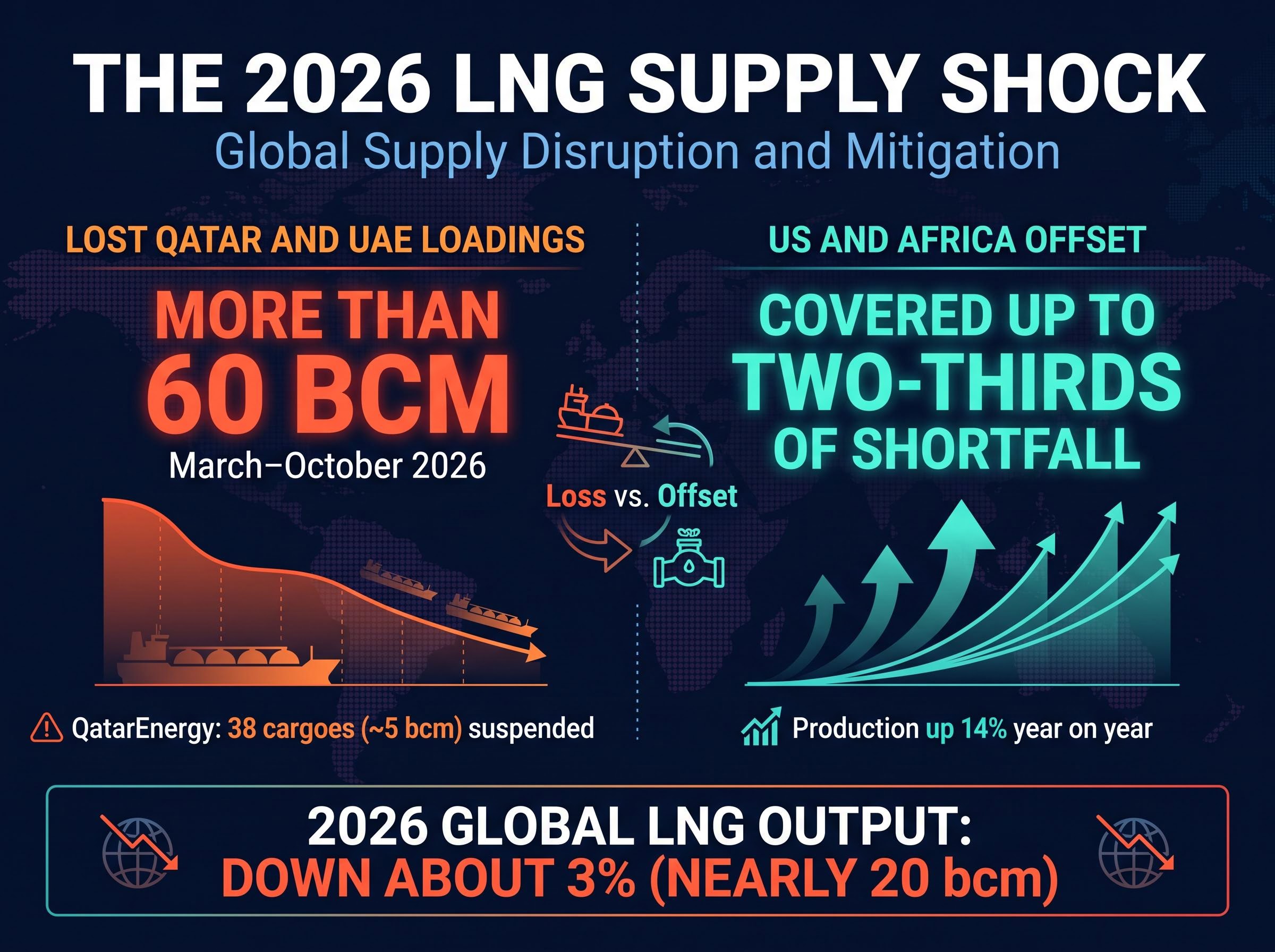
Other energy agencies have quantified the broader impact of Middle East disruptions. The International Energy Agency (IEA) projects global LNG supply will fall by 3% year-on-year in 2026, representing a decline of about 20 billion cubic meters—the largest annual drop on record. The IEA’s Global Gas Security Review estimates more than 60 bcm of loadings from Qatar and the UAE were lost between March and October 2026. Separately, Wood Mackenzie revised its outlook for South Asian LNG demand, now forecasting a decrease of roughly 6 million tonnes in 2026, down from a previous expansion estimate of 2.7 million tonnes.